
Uzbekistan moves to localize pilot training with South Korean partnership
Central Asian republic advances sustainable pilot training model to reduce reliance on foreign training centers
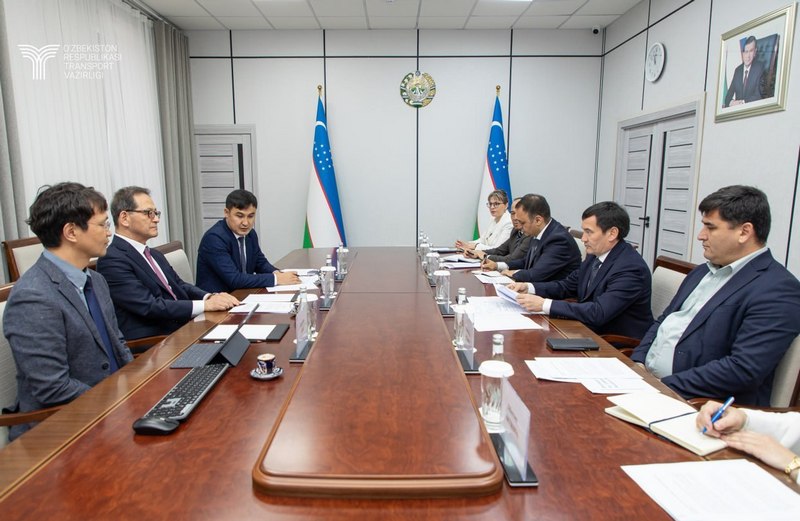

Uzbekistan and South Korea are advancing their aviation education partnership by developing a domestic training base in the Central Asian republic for pilots returning from overseas studies.
Discussions in late April between Uzbekistan’s Minister of Transport, Ilkhom Makhkamov, and a delegation from Korea Aerospace University (KAU) led by President Hee Yong Hur focused on the final phase of the 1+2+1 pilot training program. Launched in 2023 in cooperation with Tashkent State Transport University, the four‑year cycle comprises basic theoretical and final training in Uzbekistan (1+1 years), while the core phase—flight practice, simulator training, and multi‑crew procedures per international standards—takes place at KAU in South Korea (2 years).
The first cohort is currently training abroad and is expected to return in 2026–2027. Accordingly, the parties are now prioritizing the organization of the final training stage in Uzbekistan. Specific plans include establishing domestic initial flight training infrastructure, notably a flight school equipped with training aircraft and simulators. KAU has expressed readiness to supply instructional materials, software, and instructors, and to consider training some Uzbek cadets as future instructors for repatriation. This approach is projected to lower overall pilot training costs.
These efforts coincide with a major expansion of Uzbekistan’s pilot training ecosystem. Since 2023, five independent initial training programs have been launched, enrolling over 4,500 students. A portion of these trainees are studying abroad, including in South Korea and Slovenia.
In the retraining and type‑rating segment, the country already possesses a robust facility: the Uzbekistan Airways Training Center operates modern simulators to international standards. However, establishing a complete domestic initial flight training capability remains a key industry priority.
Deepening cooperation with KAU is seen as a pivotal step toward a sustainable, internationally compliant pilot training model in Uzbekistan, reducing long‑term dependence on foreign training providers.
Don't miss our articles — subscribe
Key commercial aviation news from Central Asia and the South Caucasus — once a week, in your inbox.
Editor’s Choice
-
Uzbekistan Airways–Kam Air interline opens Kabul–Eurasia connections
AirlinesNews -
Uzbekistan Airways Technics secures continued EASA Part-145 approval
AirlinesMRONews -
Chinese aircraft seating manufacturer finds first customer in Central Asia
AirlinesNews -
Uzbekistan’s youngest and oldest carriers sign interline agreement
AirlinesCargoNews
Editor’s Choice
-
Uzbekistan Airways–Kam Air interline opens Kabul–Eurasia connections
AirlinesNews -
Uzbekistan Airways Technics secures continued EASA Part-145 approval
AirlinesMRONews -
Chinese aircraft seating manufacturer finds first customer in Central Asia
AirlinesNews -
Uzbekistan’s youngest and oldest carriers sign interline agreement
AirlinesCargoNews