Kazakhstan lays groundwork for Central Asia’s first air taxi network
With new infrastructure and regulations, the country aims to become the region’s pioneer in commercial eVTOL services
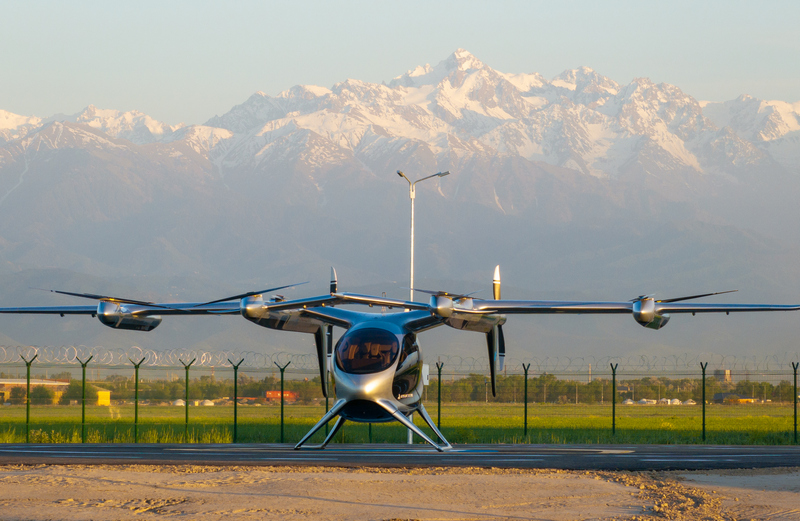

Kazakhstan is taking concrete steps towards becoming the first country in Central Asia/Caspian/Caucasus region to launch commercial electric vertical take-off and landing (eVTOL) services.
Over the past several months, the government has accelerated the development of a regulatory framework for urban air mobility (UAM), while private investors have begun building infrastructure and conducting flight demonstrations. Together, these efforts are laying the foundations for a broader UAM ecosystem involving regulators, aircraft developers, investors and infrastructure partners.
The initiative is being backed by Alatau Advance Air Group (AAAG), a company affiliated with local fintech giant Kaspi.kz. AAAG views urban air mobility as part of its wider infrastructure investment strategy for Alatau, a new futuristic satellite city under development near Almaty. Support from one of Kazakhstan’s largest private investors has enabled the project to move forward without direct government funding.
REGULATORY PUSH
Urban air mobility featured prominently during a government meeting on 19 May, when Prime Minister Olzhas Bektenov stressed the need to establish a regulatory framework for air taxis and other emerging aircraft categories.
“Global [aviation] regulators such as EASA in Europe and the FAA in the United States have already developed certification frameworks for commercial air taxi aircraft. We must also be ready for the introduction of air taxis, drones and other new aviation technologies,” Bektenov said.
Following the meeting, the Ministry of Transport was instructed to secure adoption of the necessary UAM-related legislative amendments as early as the end of June 2026.
Work on the regulatory framework has been underway for roughly a year. According to Kazakhstan’s Civil Aviation Committee, the ministry has prepared a package of legislative amendments governing air taxi operations and advanced air mobility activities in cooperation with industry stakeholders.
A further indication of the government’s commitment came on 28 May, when the Mazhilis, the lower house of parliament, approved on second reading a bill covering road safety and advanced transport technologies. The legislation establishes a legal basis for unmanned air taxis, autonomous road vehicles and automated railway transport.
The bill introduces a number of new legal definitions, including urban air mobility, advanced air mobility, vertiports, urban air mobility zones and unmanned traffic management services. It also creates certification pathways for operators, developers and manufacturers involved in eVTOL and other highly automated aircraft programs.
AUTOFLIGHT DEMONSTRATION
The transition from regulatory planning to practical implementation was underscored by recent flight trials involving Chinese eVTOL developer AutoFlight.
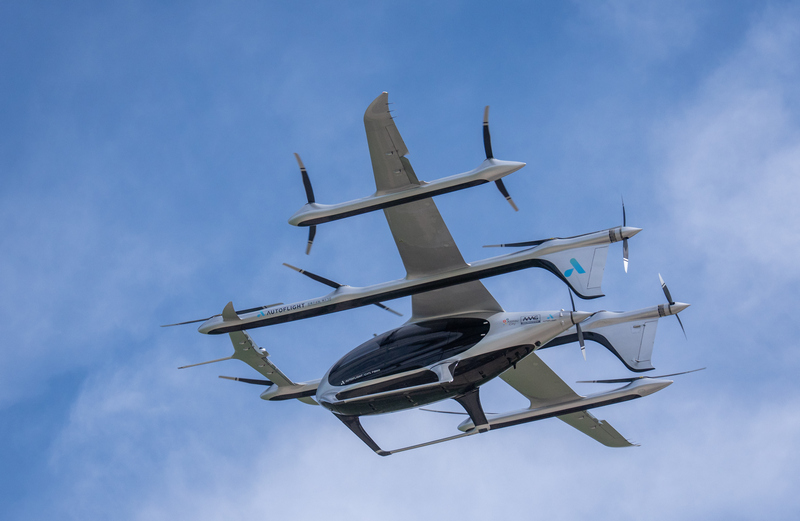
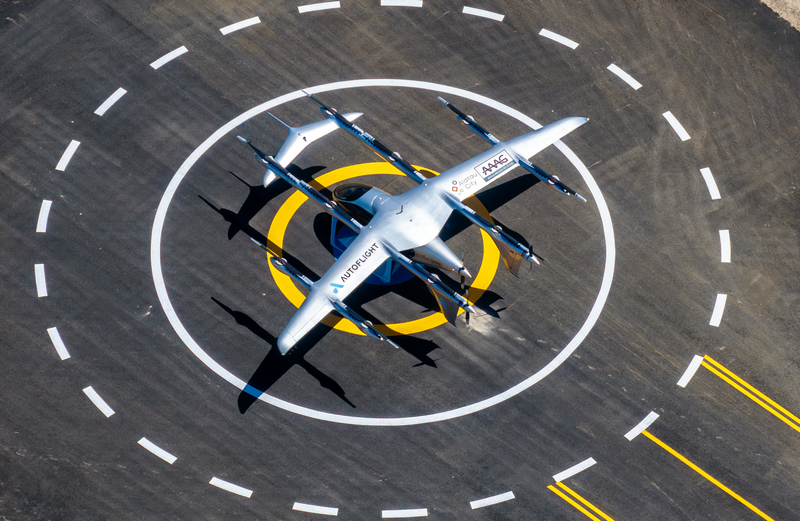
On 19 May, AAAG and AutoFlight conducted a demonstration flight of the Prosperity eVTOL in Alatau, a new smart city currently under development near Almaty.
Designed to carry a pilot and up to five passengers, the aircraft has a claimed range of 200km and a maximum speed of 200km/h.
During the event, the partners reaffirmed plans to establish an air taxi network linking Almaty, Alatau, Qonayev and key tourist destinations across the Almaty region.
At the same time, AAAG and AutoFlight signed a memorandum of understanding covering the acquisition of 50 eVTOL aircraft, including the Prosperity passenger model, the V2000 CarryAll cargo platform and the larger V5000 Matrix.
MULTIPLE AIRCRAFT PARTNERS
Kazakhstan’s ambitions extend beyond cooperation with Chinese manufacturers.
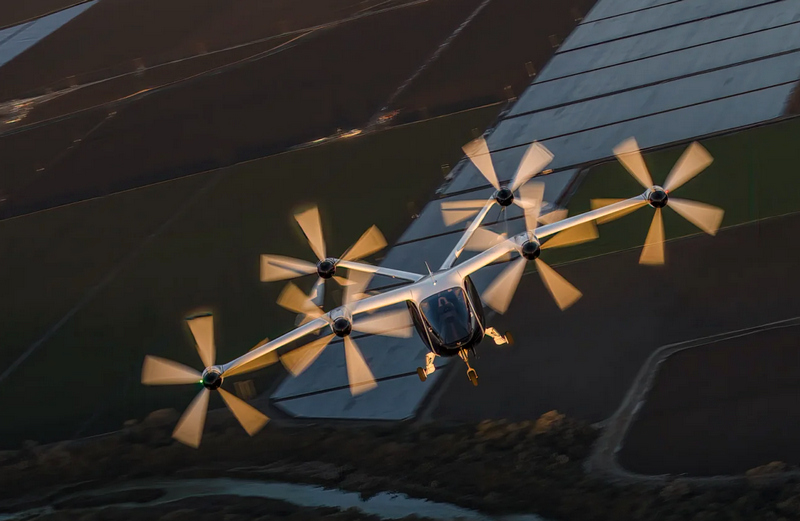
In November 2025, AAAG signed a letter of intent with US-based developer Joby Aviation covering aircraft and associated services worth up to $250 million to support the launch of air taxi operations in Kazakhstan.
Separately, Joby signed a memorandum of cooperation with Kazakhstan’s Ministry of Digital Development, Innovation and Aerospace Industry to support the creation of the regulatory and infrastructure framework required for eVTOL deployment.
At the time, AAAG chief executive Sergey Khegai said the company aimed to become the region’s first eVTOL operator, establish a dedicated test site and supporting ground infrastructure, and assist the government in developing an appropriate regulatory environment.
By working simultaneously with Joby Aviation and AutoFlight, Kazakhstan appears keen to avoid dependence on a single supplier while maintaining access to competing technological platforms.
ALATAU TESTBED
The focal point of the initiative is Alatau, a new satellite city near Almaty that the Kazakh government intends to use as a proving ground for emerging technologies.
The city recently received a special legal status designed to facilitate experimental regulatory approaches and accelerate the implementation of innovative projects.
Alatau hosted the AutoFlight demonstration and is also the site of Kazakhstan’s first vertiport, which is currently under construction. The facility is expected to form part of UAM Center Eurasia, envisioned as the country’s first advanced air mobility hub.
Development of the future vertiport network is already underway. Italy’s UrbanV is responsible for vertiport design, drawing on experience gained through projects in Europe and the Middle East, while Korea Airports Corporation is supporting work on airspace integration and digital traffic management systems.
Under current Ministry of Transport plans, six vertiports are expected to be built across Kazakhstan by 2028. They will be located at key urban and transport nodes and integrated with existing transport infrastructure.
Unlike established metropolitan areas, Alatau does not face the challenge of retrofitting an entirely new transport mode into a congested urban environment, potentially giving the project a significant advantage over similar initiatives elsewhere in the region.
TOWARDS COMMERCIAL OPERATIONS
Kazakh officials expect cargo and passenger air taxi services linking Alatau, Almaty and Qonayev to begin as early as 2027. The network could subsequently be expanded to serve tourist destinations across the Almaty region, including mountain resorts.
Unlike many urban air mobility initiatives that remain focused primarily on aircraft testing, Kazakhstan is pursuing a broader strategy encompassing regulation, infrastructure, digital services and aircraft deployment simultaneously.
The result is a program that is moving beyond isolated demonstrations towards the creation of a fully integrated urban air mobility ecosystem. If current timelines are maintained, Kazakhstan could become not only Central Asia’s first commercial air taxi market, but also the first across the former Soviet Union.
Don't miss our articles — subscribe
Key commercial aviation news from Central Asia and the South Caucasus — once a week, in your inbox.