
Fitch lifts Uzbekistan Airports’ outlook to Positive on sovereign momentum
The revision mirrors the nation’s economic outlook upgrade, backed by a strong monopoly position and rising passenger volumes
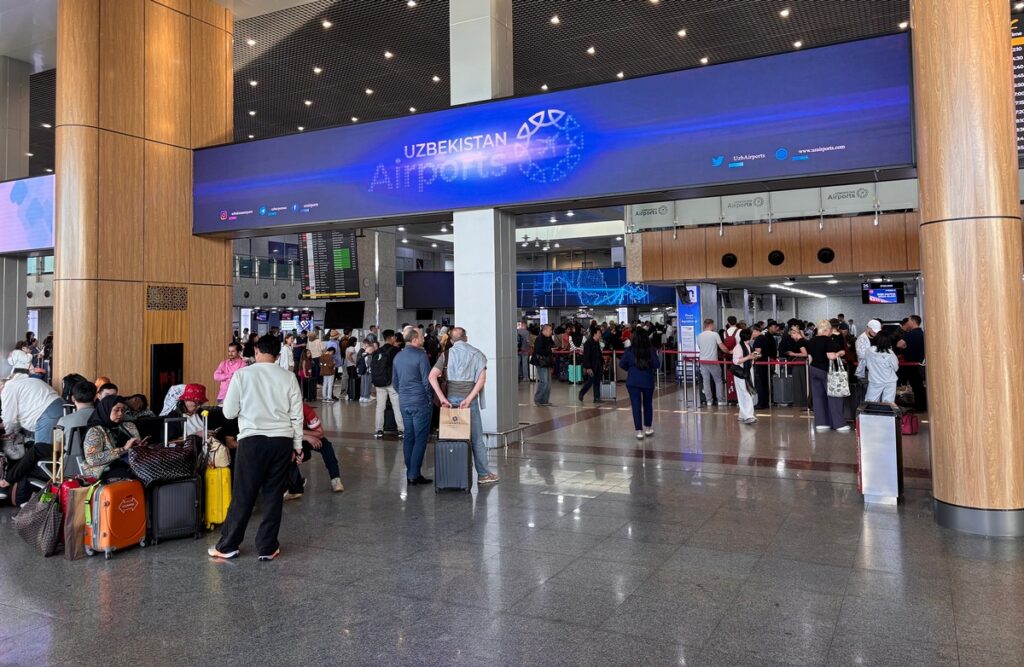

Fitch Ratings has revised the outlook on Uzbekistan Airports Joint Stock Company (UzAirports) to Positive from Stable, while affirming its Long-Term Issuer Default Rating (IDR) at ‘BB’. The affirmation comes less than a year after Fitch assigned UzAirports its first-time ‘BB’ rating in August 2025. The current rating action closely mirrors a similar outlook revision on the Republic of Uzbekistan’s sovereign credit rating, highlighting the deep financial and strategic integration between the state-owned airport operator and the national government.
Under Fitch’s Government-Related Entities (GRE) criteria, UzAirports’ rating is equalized with that of the state. The group’s Standalone Credit Profile (SCP) is also assessed at ‘bb’, reflecting its monopolistic position, strong current financial metrics, and low leverage, balanced against risks from a concentrated domestic market and foreign exchange exposure.
STRONG SOVEREIGN BACKING AND STRATEGIC INTEGRATION
As the sole operator of all civil airports in Uzbekistan, UzAirports remains a cornerstone of the country’s “Uzbekistan 2030” strategic development plan. The positive rating action is heavily supported by the state’s “Very Strong” decision-making oversight and “Strong” precedents of financial support:
- 100% State Ownership: The company is fully owned by the Ministry of Economy and Finance of the Republic of Uzbekistan, which retains ultimate decision-making power over strategic planning, major finances, and aviation tariffs.
- Direct Capital Support: The government has a clear history of funding key infrastructure. Between 2022 and 2024, the state budget allocated UZS 513.5 billion directly to UzAirports’ capital expenditure (capex) projects.
- Guaranteed Debt: While the share of sovereign-guaranteed debt remains below 25%, approximately 11.6% of senior debt is directly guaranteed by the state, with an additional 9.6% consisting of senior unsecured, interest-free loans provided by the Ministry of Economy and Finance.
- Market Strengths: Monopolistic Control and Flexible Capex
UzAirports benefits from an absolute monopoly over airport operations in a rapidly growing aviation market. Tourism expansion and robust macroeconomic performance in Central Asia continue to drive double-digit passenger volume growth.
To accommodate this demand, UzAirports is executing a phased investment program to expand capacity at Tashkent International Airport (TAS). Simultaneously, the operator is exploring Public-Private Partnerships (PPPs) to upgrade regional gateways, including Bukhara, Namangan, and Urgench.
Crucially for its credit profile, Fitch designates UzAirports’ capex program as highly flexible. Because much of the projected expansion spending remains uncommitted, the operator retains the operational flexibility to scale back or postpone developments if market conditions soften.
OPERATIONAL CHALLENGES AND RISK FACTORS
Despite a strong balance sheet and robust passenger traffic, Fitch’s commentary identifies several structural challenges typical of transitioning aviation markets in the region:
1. High Revenue Concentration
The operator’s revenue streams are heavily reliant on a small pool of carriers. In 2025, the national carrier, JSC Uzbekistan Airways, accounted for 10% of total revenue, followed by Turkish Airlines at 7% and Maersk Air at 6%.
2. Underdeveloped Non-Aeronautical Revenue
Unlike highly commercialized international hubs, non-aeronautical revenue (retail, duty-free, food and beverage, parking) comprises less than 7% of UzAirports’ total income. While upcoming airport upgrades aim to expand retail space, the current reliance on aeronautical fees exposes the operator to airline-specific shocks.
3. Tariff and Currency Risks
Aviation tariffs for resident airlines—who accounted for 68% of 2025 passenger volumes—are set in local currency (UZS) by the Ministry of Economy and Finance. The lack of formalized regulatory guidance limits long-term tariff predictability. Furthermore, while revenues are partially UZS-denominated, UzAirports carries foreign exchange risk on its debt, which is denominated in USD, EUR, and JPY (including 20% unhedged floating-rate debt).
FINANCIAL LIQUIDITY AND POSITION
UzAirports maintains a solid liquidity cushion to support its ongoing operations and near-term obligations. At the end of 2025, the group held UZS393 billion in cash alongside committed, undrawn long-term credit facilities valued at US$23 million and EUR25.9 million, providing a stable runway for its upcoming regional modernization projects.
Don't miss our articles — subscribe
Key commercial aviation news from Central Asia and the South Caucasus — once a week, in your inbox.
Editor’s Choice
-
Jiangxi Cargo to Launch Nanjing–Tashkent Freighter Route
AirlinesAirportsCargoNews -
China–EU Multimodal Cargo Corridor Opens via Tashkent
AirlinesAirportsCargoNews -
Kyrgyz carrier resumes operations on Bishkek–Tashkent route
AirlinesAirportsNews -
Etihad Airways begins operations in Uzbekistan
AirlinesAirportsNews
Editor’s Choice
-
Jiangxi Cargo to Launch Nanjing–Tashkent Freighter Route
AirlinesAirportsCargoNews -
China–EU Multimodal Cargo Corridor Opens via Tashkent
AirlinesAirportsCargoNews -
Kyrgyz carrier resumes operations on Bishkek–Tashkent route
AirlinesAirportsNews -
Etihad Airways begins operations in Uzbekistan
AirlinesAirportsNews