Kyrgyzstan bans overbooking
Kyrgyz civil aviation regulator instituted a blanket ban on ticket oversales, introducing operational and compliance friction for international airlines operating in the Central Asian nation
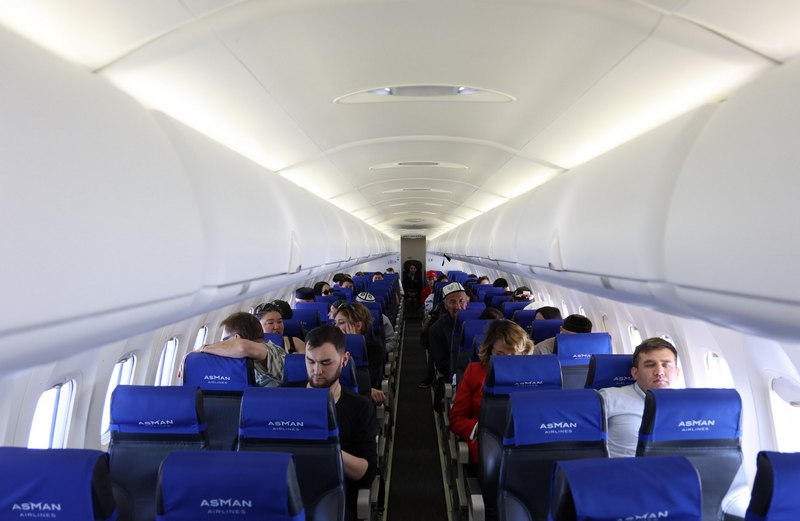

Kyrgyzstan’s State Civil Aviation Agency (SCAA) has officially banned overbooking—the widespread industry practice of overselling inventory relative to physical cabin capacity. The mandate applies universally to both domestic operators and foreign carriers flying into the Central Asian republic.
Under the new regulatory framework, the SCAA has also sharply restricted carrier protocols regarding involuntary aircraft downgrades. In the event of an equipment swap to a smaller-capacity aircraft, airlines are required to offer affected passengers a choice between rebooking on the next available flight, a full refund, or alternative carriage conditions—strictly requiring the passenger’s voluntary consent. SCAA officials emphasized that passenger complaints regarding denied boarding will face rigorous regulatory audit and enforcement.
While framed as a consumer protection victory, the policy presents distinct economic challenges for the region’s aviation sector.
Overselling capacity is a fundamental yield management tool used by network carriers to offset statistical “no-show” rates, which average between 3% and 8% across global markets.
By eliminating this financial hedge, the regulator risks forcing airlines to factor potential lost revenue from unfulfilled seats directly into baseline fares, ultimately driving up average ticket yields for consumers.
The blanket prohibition diverges from international regulatory norms. Globally, authorities typically rely on structured monetary compensation regimes rather than outright operational bans. When statutory denied-boarding payouts exceed the marginal revenue gained from overselling, airlines naturally self-regulate, striking a balance between yield maximization and service recovery costs.
For international carriers, the unilateral ban introduces technical and system-level hurdles. Multi-national operators will need to configure inventory control and revenue management systems (RMS) to bypass overbooking algorithms specifically for Kyrgyz routes. For foreign low-cost carriers operating on tight margins, the added operational complexity and reduced load factors could prompt capacity reallocations, route network optimizations, or reductions in flight frequency.
The ruling coincides with a broader operational shift across Kyrgyzstan’s commercial aviation sector. The domestic passenger market currently comprises state-owned startup Asman Airlines alongside private operators Aero Nomad Airlines, and Avia Traffic Company / Sky Fru. The national fleet recently contracted following the SCAA’s early-July revocation of TezJet’s Air Operator Certificate (AOC) after an MD-83 nose landing gear failure during taxi.
This aggressive regulatory stance follows years of heightened safety and operational oversight by Kyrgyz authorities. Those efforts culminated in June, when the European Commission officially removed all Kyrgyz-certified air carriers from the EU Air Safety List, reopening European airspace to local operators after a two-decade ban. Whether this strict consumer-facing policy yields positive market stability or dampens international connectivity remains to be seen.
Don't miss our articles — subscribe
Key commercial aviation news from Central Asia and the South Caucasus — once a week, in your inbox.