EASA certifies A320neo powered by Pratt & Whitney GTF Advantage engines
The move is set to enhance the reliability and operational efficiency of the popular narrow-body aircraft
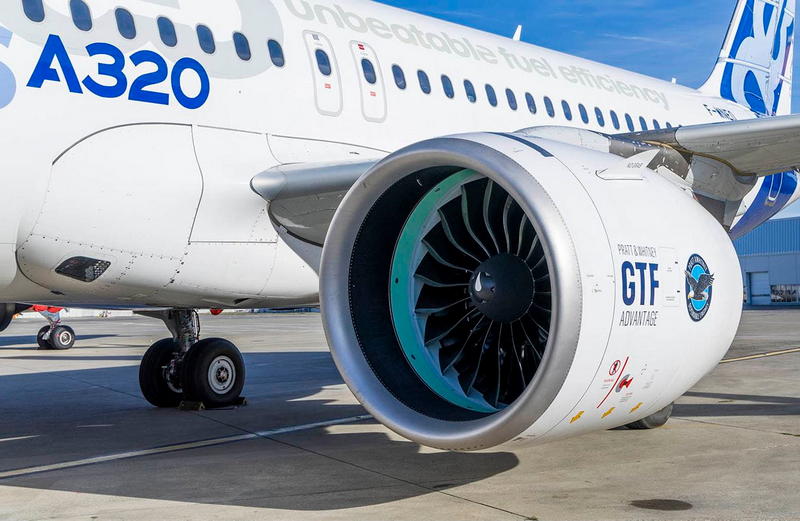

The European Union Aviation Safety Agency (EASA) has certified the Airbus A320neo powered by the upgraded Pratt & Whitney GTF Advantage engine. This approval clears the way for the aircraft to enter service in the second half of this year.
The Advantage represents the first major modification of the PW1100G since its 2014 debut on the A320neo, specifically designed to address the engine’s early “teething” issues. It received FAA approval in February 2025, followed by the EASA type certificate in October 2025.
By utilizing advanced materials and an optimized design, the Advantage increases airflow in both low- and high-pressure sections. This provides a 4% thrust increase at sea level and up to 8% at altitude—all without increasing operating temperatures.
Further enhancements to the GTF Advantage include increased core airflow to lower operating temperatures and an upgraded hot section to extend Time on Wing (TOW). Improvements in the high-pressure turbine involve refined blade shapes and advanced coatings. Additionally, the size, shape, and placement of cooling holes in the turbine and combustion chamber have been optimized, while improved water-jet cutting techniques have been applied to reduce oxidation.
The new engine is fully interchangeable with the base GTF model and will become the new production standard, with a full transition expected by 2028.
To address current durability challenges with the existing PW1100G fleet, Pratt & Whitney is also developing a retrofit kit based on the Advantage hot section—known as the GTF Hot Section Plus (HS+). This package delivers up to 95% of the Advantage’s durability gains without the thrust increase. The first HS+ kits are expected later this year and will be installed during scheduled maintenance.
The certification of the A320neo with the new engine is expected to alleviate aircraft groundings worldwide. In Central Asia, this issue has most acutely affected the region’s largest carrier, Air Astana Group. Due to prolonged PW1100G engine repairs, the group was forced to ground 13 aircraft—20% of its fleet—during the 2025 peak summer season, ultimately impacting the group’s profitability.
Given the losses incurred from groundings during a period of relatively low fuel prices in 2025, the operating economics of A321neo aircraft with base GTF engines were comparable to those of the previous-generation A321ceo. However, with the arrival of the Advantage version, the trade-off between fuel efficiency and maintenance costs is expected to be finally resolved.
Don't miss our articles — subscribe
Key commercial aviation news from Central Asia and the South Caucasus — once a week, in your inbox.