
Air Astana incurs H1 loss as passenger volumes soften
A 16% revenue increase and aggressive growth in China failed to fully offset surging jet fuel costs and ongoing GTF engine groundings
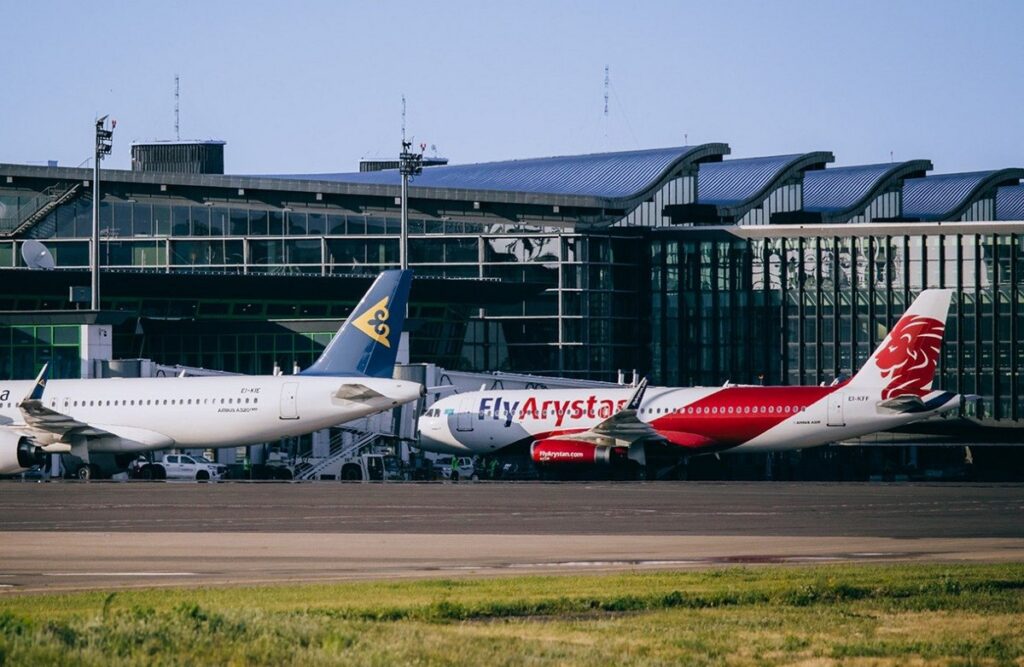

Kazakhstan’s leading airline group, Air Astana—encompassing the eponymous flag carrier and LCC subsidiary FlyArystan—reported mixed first-half 2026 results. While aggressive international route expansion drove double-digit revenue growth, escalating operational cost pressures pushed the group into a net loss despite resilient load factors.
Group passenger traffic fell 2.4% year-over-year to 4.39 million during the first six months. However, load factors remained strong, expanding 0.7 percentage points to 82.4%. Supported by robust yields, consolidated revenue rose 16% YoY to $763.9 million.
Financial growth was primarily driven by capacity reallocation from domestic sectors to higher-yield international routes. China served as the primary growth vector, with group capacity surging 93% YoY. Network optimization lifted Revenue per Available Seat Kilometer (RASK) by nearly 16%. In Q2, the carrier approached operational break-even, posting a nominal net loss of $0.1 million for the quarter.
Outpacing expenditure growth limited bottom-line performance. Profit margins faced severe pressure from rising jet fuel prices at international stations, the strengthening of the Kazakhstani tenge (KZT) against the US dollar, and persistent maintenance bottlenecks surrounding Pratt & Whitney GTF engines, which left several aircraft grounded.
Driven by these fixed overheads, Air Astana posted an H1 net loss of $21.2 million, reversing a $10.7 million net profit from H1 2025. Group EBITDAR contracted 9.7% to $141.7 million, with EBITDAR margin squeezing by 5.3 percentage points to 18.6%.
Despite near-term headwinds, Air Astana maintains a robust balance sheet. The group closed the period with $481.5 million in cash and liquid assets—representing a solid cash-to-revenue ratio of 30.9%—and a conservative net debt-to-EBITDAR ratio of 2.1x.
The carrier continues to execute its fleet expansion plan, taking delivery of three aircraft during the half to bring its total operating fleet to 63 aircraft.
Don't miss our articles — subscribe
Key commercial aviation news from Central Asia and the South Caucasus — once a week, in your inbox.
Editor’s Choice
-
Air Astana pivots route network eastward amid Eurasian conflicts
AirlinesEditor's ChoiceNews -
Air Astana finalizes order for 25 Airbus A320neo family aircraft
AirlinesEditor's ChoiceNews -
Air Astana Group extends Dubai suspension through end of summer schedule
AirlinesNews -
Air Astana increases transit traffic by 65%, but sees 3% dip in total passengers
AirlinesNews
Editor’s Choice
-
Air Astana pivots route network eastward amid Eurasian conflicts
AirlinesEditor's ChoiceNews -
Air Astana finalizes order for 25 Airbus A320neo family aircraft
AirlinesEditor's ChoiceNews -
Air Astana Group extends Dubai suspension through end of summer schedule
AirlinesNews -
Air Astana increases transit traffic by 65%, but sees 3% dip in total passengers
AirlinesNews